Ukraine faces 100% dependence on a single satellite network
Reliance on Starlink has become a strategic vulnerability for Kyiv and its European allies as service disruptions highlight the risks of having no viable alternative.
By Kavya Kapoor ·
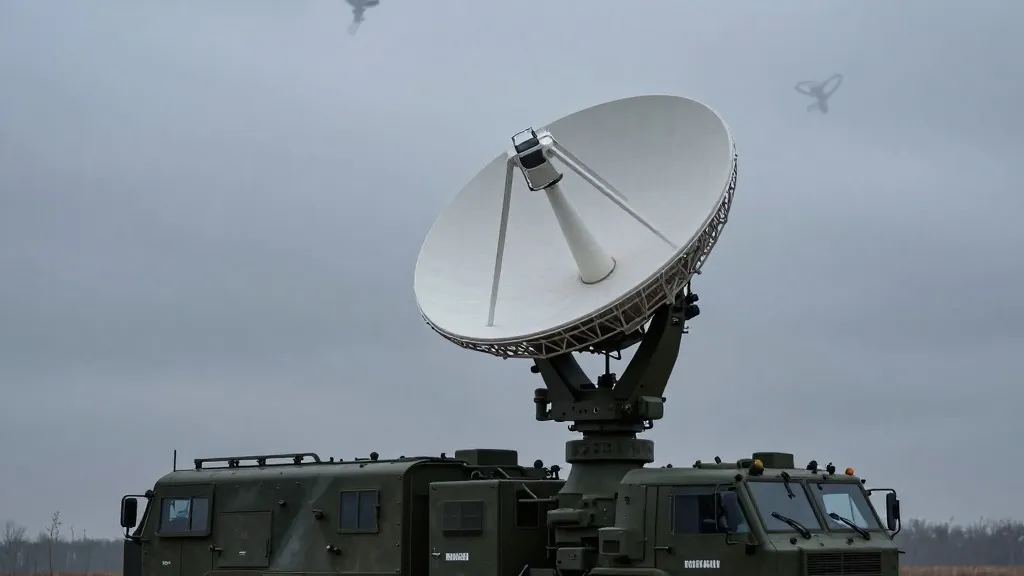
Ukraine's defense strategy is currently tethered to a single commercial satellite network, creating a critical point of failure in the ongoing war. The Ukrainian military and civilian infrastructure rely heavily on Starlink for communications, yet recent service interruptions have exposed how vulnerable this dependency is. As the conflict enters another phase of uncertainty, Kyiv and its European partners are forced to confront the logistical and political challenges of operating without this dominant communications system.
The core of the tension lies in the gap between Starlink's technical superiority and its operational reliability. The service has been instrumental in Ukraine's resistance since the full-scale invasion began. It provides high-speed internet and data streams to any user or vehicle equipped with a compact terminal. This connectivity is not just a convenience; it is a lifeline for coordinating military operations and maintaining civilian communications in a country under frequent attack. However, the network's reliability has wavered in recent months, raising alarms about the sustainability of this arrangement.
A primary concern for Ukrainian strategists is the lack of viable alternatives in the current market. According to the head of hardware research and development at the Ukrainian defense company BlueBird Tech, Starlink holds a near-monopoly on effective satellite coverage. This individual, who spoke anonymously for security reasons, noted that the service stands out because of its specific combination of cost, availability, and ease of use. In practical terms, there are virtually no competitors that offer a similar package to the Ukrainian military and civilian sectors. This dominance makes it difficult to diversify communications channels without incurring significant costs or dealing with complex technical integration.
The technical limitations of the current system are also becoming more apparent in the field. While the service offers robust coverage, it requires specific physical conditions to function effectively. The BlueBird Tech representative explained that the main practical limitation is the need to position the antenna so it can clearly receive signals from the satellites. This requirement can be a significant hurdle in urban warfare or rugged terrain, where line-of-sight to the sky is frequently obstructed by buildings, trees, or terrain features. As the military adapts to these constraints, the question of whether other systems can meet the same standard without similar positioning issues remains unanswered.
Starlink has transformed the Ukrainian military's capability to engage in modern warfare. Beyond basic voice and data communication, the network allows for the remote control and guidance of drones. These unmanned aerial vehicles are used for two critical purposes: air defense against Russian attacks and offensive strikes against Russian targets. The latency and bandwidth provided by the satellite network are essential for piloting these drones effectively. Without this infrastructure, the military would struggle to maintain the same level of precision and reaction speed in its drone operations, potentially altering the tactical balance on the front lines.
The financial burden of this dependency is shared by several allied nations. The United States government, along with European countries including Poland and Germany, has funded the procurement of tens of thousands of commercial Starlink terminals for use in Ukraine. These allies are also covering the ongoing subscription fees required to keep the service active. This financial support has been crucial in keeping the network operational, but it also ties the military's communications capabilities to the commercial terms and political decisions of the service provider. The reliance on external funding for a critical military asset adds another layer of complexity to the strategic calculus.
To mitigate the risks associated with the commercial service, the United States has provided Ukraine with access to a military-grade version of the network known as Starshield. This variant offers enhanced security features and is designed for defense applications. Ukrainian defense companies are currently testing their own technologies in cooperation with the military using this platform. The BlueBird Tech representative confirmed that these tests are part of a broader effort to understand how different satellite systems perform in operational conditions. However, Starshield is not yet a complete replacement for the commercial network that supports the bulk of daily communications and drone operations.
The recent disruptions to service have accelerated the push for alternative solutions. While Starlink remains the backbone of Ukrainian communications, the unpredictability of its availability has prompted a reassessment of long-term strategies. European and American officials are now looking for ways to reduce the strategic risk posed by a single point of failure. This involves exploring other satellite constellations and developing domestic communication capabilities. The goal is to create a resilient network that can withstand both technical failures and political shifts in the provider's priorities.
Looking ahead, the integration of new systems will be a gradual process. The Ukrainian military must balance the immediate need for reliable communications with the long-term goal of technological independence. The success of this transition will depend on how quickly alternative technologies can be developed and deployed. Until then, Ukraine will continue to operate with a hybrid system, relying on Starlink for its core functions while testing and refining backup options. The challenge is to ensure that these backups are not just theoretical possibilities but practical tools that can be deployed in the heat of combat.
The situation highlights a broader trend in modern warfare where commercial technology plays a central role in military strategy. The case of Starlink in Ukraine serves as a cautionary example of the risks associated with deep dependence on private sector infrastructure. As other conflicts emerge, other nations may face similar dilemmas. For now, Ukraine must navigate the complexities of a war where the sky itself has become a contested and critical resource, requiring careful management to keep the lines of communication open.
Source: Ars Technica