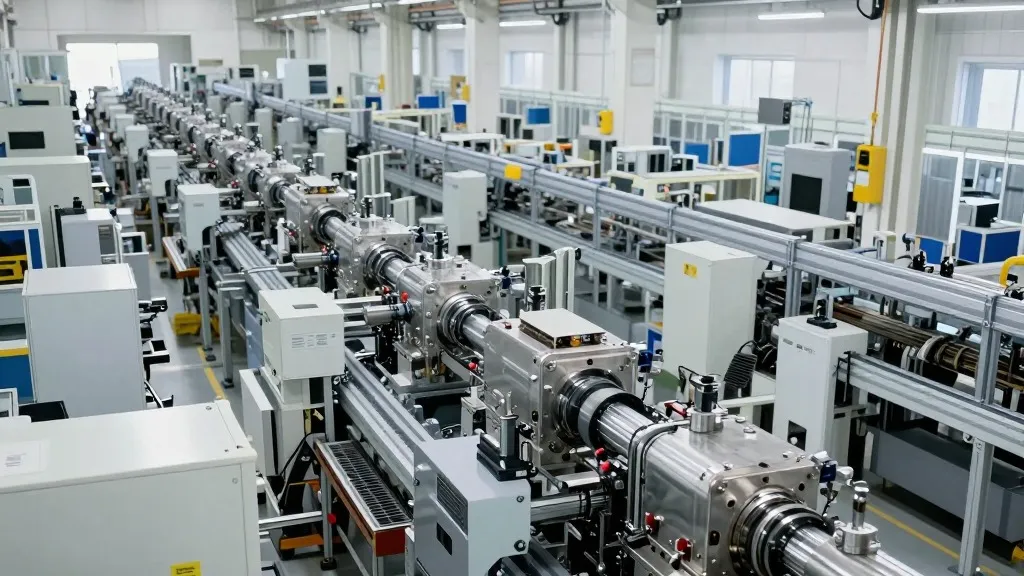
A Small AI Team Built a Powerful Coding Model Using AI
A startup called Recursive has released Flint, a 40-billion parameter model that rivals larger systems by leveraging an automated system for its own development.
By Valentina Cruz ·
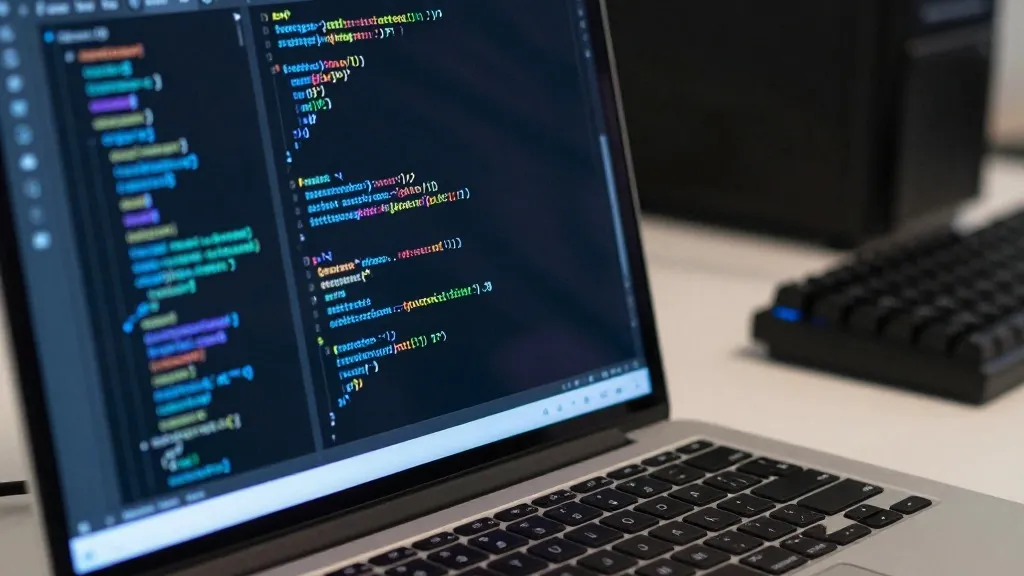
A small startup has released a new open-weight AI coding model named Flint that performs at a level typically reserved for much larger systems, suggesting that the controversial concept of recursive self-improvement is becoming a practical reality. The model, developed by a company called Recursive, was largely designed and refined by artificial intelligence itself rather than a large team of human engineers. This development marks a significant step toward using AI to build better AI, a process that has long been theorized but rarely demonstrated at such a high quality.
The push toward AI-driven development began with the founding of Recursive by Richard Socher, a former chief scientist at Salesforce, and Jeff Clune, a professor at the University of British Columbia. The team developed a system known as the Eureka Machine, which automates various parts of the model creation pipeline. This approach allowed a handful of researchers to produce a competitive model in just a few months, a timeframe that would usually take established labs much longer to achieve.
In the past few days, I have been testing Flint on a Mac with 48 GB of RAM. Despite having only 40 billion parameters, a size that is modest compared to the trillions of parameters in the largest industrial models, Flint demonstrated impressive capability. I used it to create a command-line to-do list, a web-scraping tool, and a simple website explaining how recursive self-improvement works. In my experience, models of this size are often slow or prone to errors, but Flint handled every request accurately and quickly. It outperformed other models of similar size and architecture on standard coding benchmarks.
The Eureka Machine did not just run the model; it helped design it. Socher stated that the system devised new training methods, novel architectures, and code optimized for specific silicon chips. This automation reduced the need for constant human intervention, allowing the team to iterate rapidly. While AI is already used to help test and refine models, this project represents a deeper integration where the AI contributes to the foundational decisions of its own creation.
The concept of recursive self-improvement has gained traction but also sparked concern among experts. Some worry that if an AI can improve itself indefinitely, it might eventually escape human control. These fears were amplified in September when a researcher from Anthropic resigned to warn that such advances could lead to human extinction within a few years. The controversy has even reached the political sphere, with several bills in Congress proposing to ban the practice.
Recursive views these fears as overly dramatic and believes that legislation to stop the process would hinder progress. Socher emphasized that Flint was built using a system that remains under human oversight. The long-term goal is for the Eureka Machine to achieve full recursive self-improvement, but humans will retain the ability to stop the process if necessary. The company has raised $650 million from investors including Google Ventures, Nvidia, and AMD Ventures to pursue this vision at a valuation of $4.65 billion.
Other researchers are exploring similar paths. A recent study from Microsoft, Carnegie Mellon University, and the University of Virginia showed how an AI coding agent can improve itself by modifying its own software and model weights. This suggests that fully recursive systems are feasible and not just theoretical. For now, the approach seems like a promising way to make cutting-edge AI more accessible to smaller teams. Socher hopes that Flint will demonstrate that this method is beneficial and will lead to models that help more people.
Source: Wired