Cyan Lights: The New Robotaxi Signal
Federal regulators are proposing a specific blue-green illumination standard to help drivers identify autonomous vehicles on the road.
By Ji-eun Choi ·
The number twelve point eight volts is currently the benchmark for testing vehicle electrical systems, a figure that NHTSA now plans to update as part of a major regulatory overhaul. This specific technical adjustment is just one element of a broader proposal aimed at modernizing how driverless cars interact with the rest of traffic. The agency is moving to finalize a distinct visual identifier for autonomous vehicles, ending years of industry debate over the best method to alert humans that no one is at the wheel.
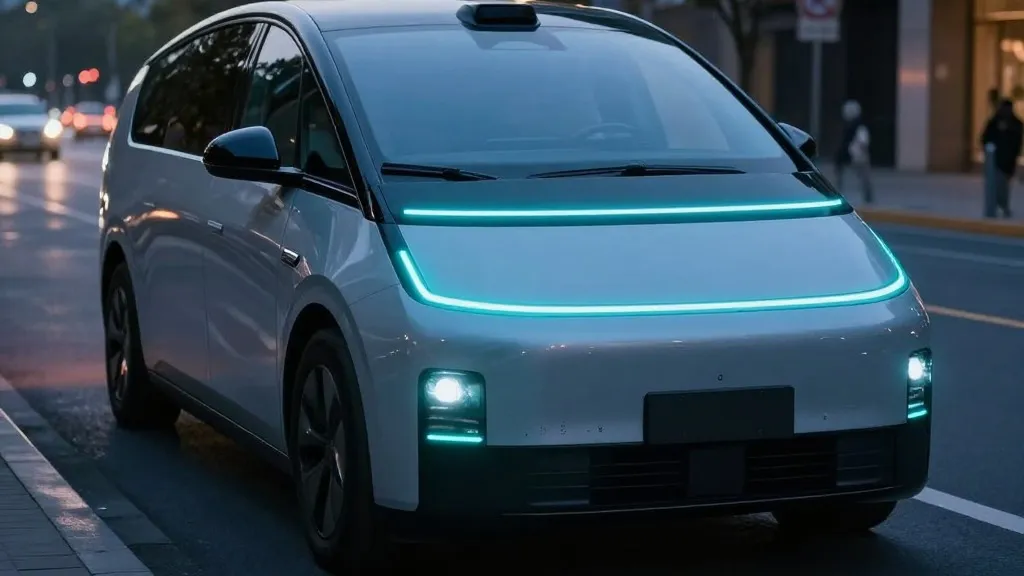
The core of the proposal centers on the adoption of cyan-colored marker lamps. Federal regulators argue that this specific blue-green hue fills a visual gap in the current automotive lighting spectrum. Existing standards already assign red, amber, white, and flashing blue or red lights to critical functions like braking, turn signals, headlights, and emergency services. By introducing cyan, the National Highway Traffic Safety Administration seeks to provide a clear, consistent, and legally defined signal that an automated driving system is currently in control.
There is historical context for this color choice, though it has not been without friction. Mercedes-Benz previously secured state-level approval for turquoise lights on its Level 3 Drive Pilot vehicles. However, the automaker ultimately abandoned that specific hardware design in favor of a different Level 2++ approach. Despite that shift, NHTSA wants to establish a uniform national standard. This would allow major robotaxi operators such as Waymo, Nuro, and Zoox, alongside traditional manufacturers like GM and Mercedes, to implement the technology without confusion or regional inconsistencies.
The proposed rule would make these cyan lights optional for manufacturers. However, the agency aims to eliminate the patchwork of different colors and signals that could currently appear on the road. By setting official federal standards for brightness, color, and physical location, regulators ensure that any vehicle choosing to adopt the system does so with a consistent and legal configuration. This standardization is intended to help law enforcement and other road users quickly identify autonomous vehicles.
Alongside the new lighting requirements, the proposal removes several legacy rules that do not apply to human-free designs. Current regulations mandate physical hazard switches, manual beam shifters, and turn levers inside the cabin. NHTSA proposes deleting these requirements to accommodate vehicles that may lack traditional driver controls. The agency is also considering removing rules that dictate the vertical positioning of high-beam lights relative to low-beam lights.
This update fits into a wider Department of Transportation strategy to streamline the deployment of autonomous vehicles. The goal is to reduce administrative barriers for automakers building cars without steering wheels or pedals. Yet, the regulatory environment remains active and scrutinizing. Just last month, NHTSA launched an audit query into the Tesla Cybercab. This investigation examines the technical data and certification processes Tesla used, specifically focusing on the absence of sideview mirrors, pedals, and steering wheels, which are currently required under existing safety standards.
The path forward involves balancing these new, streamlined rules with ongoing enforcement of current standards. While the agency pushes to remove outdated physical controls, it is simultaneously ensuring that new technologies meet rigorous federal benchmarks. The cyan light proposal represents a significant step toward a unified national identity for driverless transport, though final implementation will depend on the completion of these proposed rule changes.
Source: The Verge