Google TPUs Begin Serving AI Workloads Inside Meta Data Centers
A new PyTorch-native backend allows Meta to deploy AI models on Google's hardware directly, marking a significant shift in the competitive landscape for AI compute.
By Anastasia Volkova ·
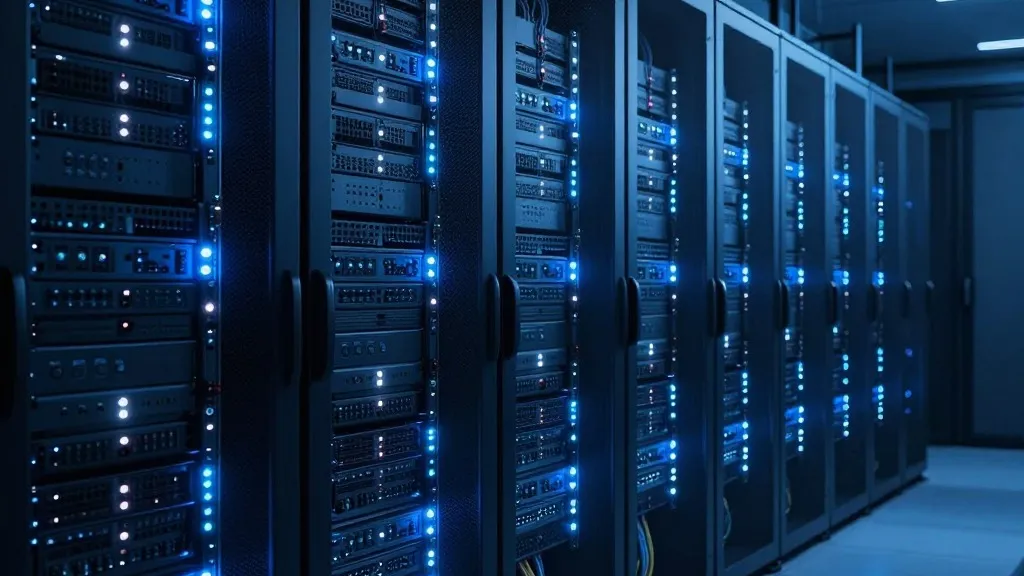
Google's custom artificial intelligence accelerators are now processing production workloads for Meta, the parent company of Facebook and Instagram, marking a notable development in the ongoing competition for AI infrastructure. The deployment relies on a new version of the SGLang inference engine that operates natively within the PyTorch framework, Google announced on its developer blog. This integration allows Meta to utilize Google's tensor processing units, or TPUs, for artificial intelligence tasks without needing to rewrite its existing code to run on Google's proprietary JAX framework.
The release includes a PyTorch-native version of vLLM, another widely utilized inference engine, which has been made available as open-source software. Previously, both SGLang and vLLM required the use of JAX to function on TPU hardware. The new software stack enables these tools to run directly on Google's silicon, a capability that Zongwei Zhou, a PyTorch-TPU lead at Meta, described as providing a "remarkably mature, PyTorch-native serving stack." The development of this software was a collaborative effort involving teams from Meta, Google, and RadixArk, a startup established by the creators of SGLang.
This technical update represents a strategic push to expand the use of Google's chips beyond its own data centers and into the hardware facilities of major corporate clients. While Google has historically used its TPUs for its own services, offering them for sale to external customers threatens Nvidia's dominant position in the market for AI processors. Google has declined to clarify the specific location of the TPUs currently running at Meta, though past discussions reportedly involved renting capacity in 2026 with an option to purchase in 2027. Meta subsequently signed a multi-year agreement for rental services.
The move comes as other technology companies pursue similar strategies to reduce their reliance on Nvidia's software ecosystem. Just one day prior to the announcement, Amazon released TorchNeuron, a native PyTorch backend for its own Trainium chips, at the PyTorch Conference. Both releases are designed to facilitate the use of alternative hardware for AI model training and inference. Jana van Greunen, director of PyTorch engineering at Meta, stated that the company "cannot be constrained by a single hardware architecture" and that the new TorchTPU software enables the deployment of PyTorch workloads to Google TPUs.
Performance data provided by Inferact, a startup involved in developing vLLM-TorchTPU, suggests the hardware is capable of high-speed output. Tests reportedly showed a tuned setup serving the open-weight Kimi K3 model reaching speeds above 700 tokens per second for a single user on Google's seventh-generation Ironwood TPU. In comparison, a similar configuration utilizing 16 Nvidia GB200 chips reached 452 tokens per second. The test utilized a technique known as speculative decoding to accelerate the generation of text.
Work continues to expand the range of models supported by the new SGLang-TorchTPU engine. RadixArk indicated that support for DeepSeek V4.1 Flash and Reflection Beam is planned for future updates. The organization is also aiming to provide support for new open models on their release date by the first quarter of 2027. Additional details regarding the collaboration between Google, Meta, and RadixArk are expected to be shared during the SGLang Summit 2026, scheduled for November 12 and 13 in San Francisco.
Source: Tom's Hardware